How the Human Body Works: A Kid's Guide
Did you know that right now, inside your body, billions of tiny cells are working non-stop to keep you alive and functioning? Your heart is pumping blood, your lungs are breathing air, your brain is thinking thoughts, and your stomach is digesting your last meal—all at the same time! The human body is the most incredible machine on Earth, and the amazing thing is that you already have one. Let's take a tour of the different systems that make up your body and discover how they work together to keep you going.
Your body is made up of about 37 trillion cells—that's 37,000,000,000,000! These microscopic building blocks are too small to see without a powerful microscope, but each one is alive and doing its job. Cells come in many different shapes and sizes, and they each have a special role. Red blood cells carry oxygen, muscle cells let you move, and brain cells help you think and remember. Every second, millions of your cells are dividing, dying, and being replaced. Your body is literally rebuilding itself all the time!
The Skeletal System: Your Inner Framework
Imagine trying to build a tower with jelly—that's what your body would be like without bones! Your skeleton is the framework that gives your body its shape and holds everything together. Adults have 206 bones, but babies are born with about 270, which is why they feel so flexible! As you grow up, some of these bones fuse together, which is why adults end up with fewer bones than babies.
Bones might feel hard and dead, but they're actually alive! They're filled with blood vessels, nerves, and bone marrow—the spongy stuff inside your bones where new blood cells are made. Every second, your bone marrow produces about 2 million red blood cells. That's pretty impressive manufacturing!
Your bones come in all different shapes. Some are long, like the bones in your arms and legs. Some are flat, like the bones in your skull that protect your amazing brain. Some are tiny, like the 27 bones in each hand that let you write, draw, and play video games. Your skeleton has five main parts: the skull, spine, ribcage, arms, and legs.
Joints are where two bones meet, and they're what let you move. Without joints, you'd be as stiff as a robot! Some joints, like your knees and elbows, work like hinges, allowing back-and-forth motion. Others, like your shoulders and hips, are ball-and-socket joints that let you move in almost any direction. Your knuckles are hinge joints too, which is why you can make a fist.
The Muscular System: Moving and Grooving
Bones don't move by themselves—they need muscles. Your body has over 600 muscles, and they make up about 40% of your body weight. There are three types of muscles: skeletal muscles (which you control), smooth muscles (which work automatically, like the muscles in your intestines), and cardiac muscle (which is only in your heart).
How do muscles work? It's actually pretty simple—when you want to move, your brain sends a signal through your nerves to the muscles, and they pull on the bones like ropes. Muscles can only pull, not push, which is why you need pairs of muscles to move your limbs. When you bend your arm, your biceps (the muscle on top) pulls and your triceps (the muscle on bottom) relaxes. To straighten your arm, the opposite happens. Teamwork!
The largest muscle in your body is the gluteus maximus—the muscles in your rear end that help you sit, stand, and walk. The smallest muscle is the stapedius, deep inside your ear, which is smaller than a grain of rice and helps protect your eardrum from loud sounds.
Some muscles work without you thinking about them. Your heart is a muscle that never stops pumping—it beats about 100,000 times every day, pumping blood through your entire body. The muscles in your stomach digest your food, and the muscles in your blood vessels push blood around and around your body, over and over again.
The Circulatory System: Your Body's Delivery Service
Every cell in your body needs oxygen and nutrients to survive, and that's what your circulatory system delivers. This system includes your heart, blood vessels, and blood. Think of it as your body's delivery service, with blood as the delivery truck and your heart as the powerful engine that pumps it.
Your heart is about the size of your fist, and it sits slightly to the left of center in your chest. It's a marvel of engineering—it beats about 70 times per minute, 100,000 times per day, and about 3 billion times in a lifetime! With each beat, your heart pumps about 2 ounces of blood. Over the course of a day, that adds up to about 2,000 gallons of blood circulating through your body!
Blood travels through two main paths: from the heart to the lungs (where it picks up oxygen) and from the heart to the rest of the body (where it delivers that oxygen). Arteries carry oxygen-rich blood away from the heart, while veins carry oxygen-poor blood back to the heart. Capillaries are the tiny, thin-walled vessels where the actual exchange of oxygen and nutrients happens with your cells.
Blood is made up of four components: red blood cells (which carry oxygen), white blood cells (which fight infection), platelets (which help blood clot when you get a cut), and plasma (the liquid part that carries everything around). You have about 5 liters of blood in your body—that's enough to fill a large soda bottle!
The Respiratory System: Breathing Life In
You can live for weeks without food and days without water, but you can only survive a few minutes without air. Every breath you take brings oxygen into your body, which your blood then carries to every cell. The respiratory system is how your body gets the oxygen it needs.
When you breathe in, air enters through your nose or mouth and travels down your throat into your trachea (windpipe). The trachea splits into two tubes called bronchi, one going to each lung. Inside your lungs, the bronchi branch into smaller and smaller tubes called bronchioles, which end in tiny air sacs called alveoli.
Your lungs contain about 300 million alveoli—if you spread them out flat, they'd cover an entire tennis court! These tiny sacs have incredibly thin walls, so thin that oxygen can pass through them into your blood vessels. That's where the magic happens: oxygen jumps from the air into your blood, and carbon dioxide (a waste product from your cells) jumps from your blood into the air.
You breathe about 20,000 times every day. When you exercise, you breathe faster because your muscles need more oxygen. When you sleep, you breathe slower. Your breathing rate is controlled by your brain, specifically an area called the brainstem, which monitors the levels of carbon dioxide in your blood and tells you when to breathe faster or slower.
The Digestive System: From Munch to Much
Have you ever wondered what happens to the food you eat? It goes on an incredible journey through your digestive system, a series of organs that break down food into nutrients your body can use. This process is called digestion, and it takes about 24 to 72 hours, depending on what you ate.
The adventure begins in your mouth. Your teeth chop and grind food into smaller pieces while your saliva starts to break it down. Saliva contains enzymes—special chemicals that start digesting starches in foods like bread and potatoes. That's why a piece of bread starts to taste sweeter the longer you chew it!
After you swallow, food travels down your esophagus—a tube that connects your throat to your stomach. You might think food falls down because of gravity, but actually, your esophagus has muscles that squeeze and push food along in a wave-like motion called peristalsis. That's why you can eat and drink even while standing on your head!
Your stomach is like a stretchy bag that holds up to a quart of food. It mixes food with stomach acids—really strong chemicals that look and feel a lot like battery acid! These acids kill germs and break down food into a soupy mixture. The stomach churns everything around for several hours until the food becomes a thick liquid.
Next stop: the small intestine. This tube is about 22 feet long (that's longer than a school bus is long!), and it's where most of the digestion happens. The small intestine is lined with tiny finger-like projections called villi, which absorb nutrients from your food into your blood. Your liver adds bile (which helps digest fats), and your pancreas adds enzymes to break down proteins, fats, and carbohydrates.
What's left goes to the large intestine (colon), where water is absorbed and waste products are formed. Finally, the waste exits your body when you use the bathroom. Pretty amazing journey for a simple ham sandwich!
The Nervous System: Your Body's Computer
If your body is a machine, your nervous system is the computer that runs it. This incredibly complex network of nerves and brain processes everything you think, feel, and do. It lets you see, hear, smell, taste, and touch the world around you. It controls your heartbeat, breathing, and digestion without you having to think about it. And it allows you to learn, remember, dream, and imagine.
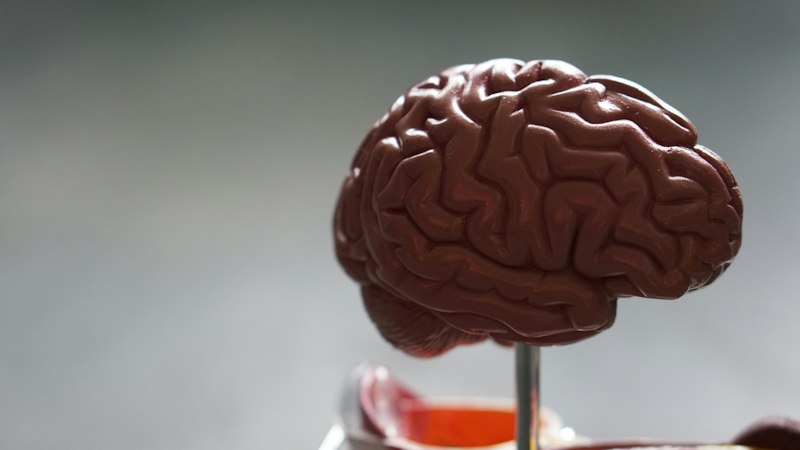
The central nervous system consists of your brain and spinal cord. Your brain is the boss of your body—it weighs about 3 pounds and contains about 86 billion neurons (nerve cells), each connected to thousands of others. That's trillions of connections! Your brain is divided into different areas that control different functions: the frontal lobe handles planning and decision-making, the occipital lobe processes what you see, and the cerebellum coordinates movement.
Your spinal cord is the information highway connecting your brain to the rest of your body. It's about 18 inches long and runs down the middle of your back, protected by your vertebrae (the bones of your spine). Nerves branch off from the spinal cord and travel to every part of your body, carrying messages back and forth at incredible speeds—up to 268 miles per hour!
The peripheral nervous system includes all the nerves that branch out from your brain and spinal cord to the rest of your body. Some nerves control voluntary actions (things you choose to do, like walking or waving), while others control involuntary actions (things your body does automatically, like breathing and digesting food).
Fun Facts About Your Amazing Body
- Your nose can remember 50,000 different scents!
- You blink about 20 times per minute—that's about 1,200 times every hour!
- The smallest bone in your body is the stapes, in your ear—it's smaller than a grain of rice.
- Your stomach gets a new lining every 3-4 days to prevent it from digesting itself!
- If your brain were a computer, it could store 2.5 million gigabytes of memory—that's equivalent to 3 million hours of TV shows!
- You shed about 40 pounds of skin in your lifetime.
- Your thigh bone (femur) is the longest bone in your body and is stronger than concrete!
- You can't tickle yourself because your brain predicts the sensation and cancels it out.
- Babies are born without kneecaps—they develop fully by age 3-4.
- Your body gives off enough heat in 30 minutes to boil a gallon of water!
Keeping Your Body Healthy
Your body is incredible, but it needs proper care to work its best. Here are some ways to keep all your body systems running smoothly:
Eat a balanced diet: Your digestive system needs fruits, vegetables, whole grains, proteins, and dairy to get all the nutrients your cells need. Try to eat the rainbow—different colored fruits and vegetables have different vitamins and minerals.
Get plenty of exercise: Your muscles and bones get stronger when you use them. Aim for at least an hour of physical activity every day. Play outside, ride your bike, swim, dance—anything that gets you moving!
Sleep well: Your brain and body do a lot of repair work while you sleep. Kids your age need about 9-11 hours of sleep every night. During sleep, your brain consolidates memories, your muscles relax and grow, and your body releases growth hormones.
Stay hydrated: Your body is about 60% water, and you lose water throughout the day through breathing, sweating, and using the bathroom. Drink plenty of water to replace what you lose.
Wash your hands: Your skin is a protective barrier against germs, but your hands pick up lots of bacteria and viruses from everything we touch. Washing with soap and water for 20 seconds (that's about two rounds of "Happy Birthday") helps prevent illness.
Explore More
Want to learn more about how your body works? Check out our interactive Human Body tool where you can explore different organs and systems! You can also learn about science experiments that explore how chemistry works in your body, or discover the science behind why you need water to survive. And stay tuned for our upcoming article on nutrition and healthy eating—you are what you eat!
You're a walking, talking science lab!
Every single day, your body does thousands of things without you having to think about it. Your heart beats, your lungs breathe, your stomach digests, and your brain processes information—all at the same time! Scientists are still discovering new things about how the human body works, so there's always more to learn.
The fact that you're alive and functioning is one of the greatest miracles of nature. Take care of your body—it's the only one you've got, and it's doing an amazing job keeping you alive and thriving. You are an incredible, complex, wonderful machine!