The Water Cycle: Where Does All That Water Go?
Have you ever wondered why it rains? Or where the water in your glass comes from? Or why there's water in lakes and rivers? The answer is something called the water cycle, and it's one of the most amazing processes on Earth. The water cycle is the continuous journey that water takes around our planet, moving from the oceans and lakes into the sky, falling as rain or snow, and flowing back to the oceans, lakes, and rivers. And it all happens over and over again, all the time, everywhere on Earth.
The water on Earth today is the same water that's been here for millions of years. The same water that dinosaurs drank might be in your glass right now! That's because water keeps recycling itself through the water cycle. It's been called "nature's recycling system" because it cleans and moves water around our planet naturally.
Step One: Evaporation
The water cycle starts with the sun. Our nearest star heats up water in oceans, lakes, rivers, and even puddles. When water gets warm enough, it changes from a liquid into a gas called water vapor and floats up into the sky. This process is called evaporation—you might remember this word from seeing puddles disappear on a hot day or watching water boil on the stove.
But evaporation doesn't just happen from water. Plants lose water through their leaves in a process called transpiration. It's like the plant is sweating! When you see morning dew on grass, some of that moisture came from plants. Together, evaporation and transpiration add enormous amounts of water to the atmosphere every single day.
Here's a cool fact: the ocean is so big that about 80% of all evaporation happens from the ocean. That's a lot of water floating upward! The salt stays behind in the ocean, which is why the water vapor that rises is fresh and clean.
Step Two: Condensation
As water vapor rises higher into the sky, the air gets colder. Remember, the higher you go, the colder it gets—that's why mountains have snow on their peaks even in summer. As the water vapor cools down, it changes back into tiny liquid water droplets. These droplets cluster together around tiny dust particles in the air, forming clouds. This process is called condensation.
Condensation is the same thing that happens when you see your breath on a cold day or when your bathroom mirror fogs up after a hot shower. The warm breath or shower steam hits the cold surface and turns back into tiny droplets of water. In the sky, these droplets form clouds and fog.
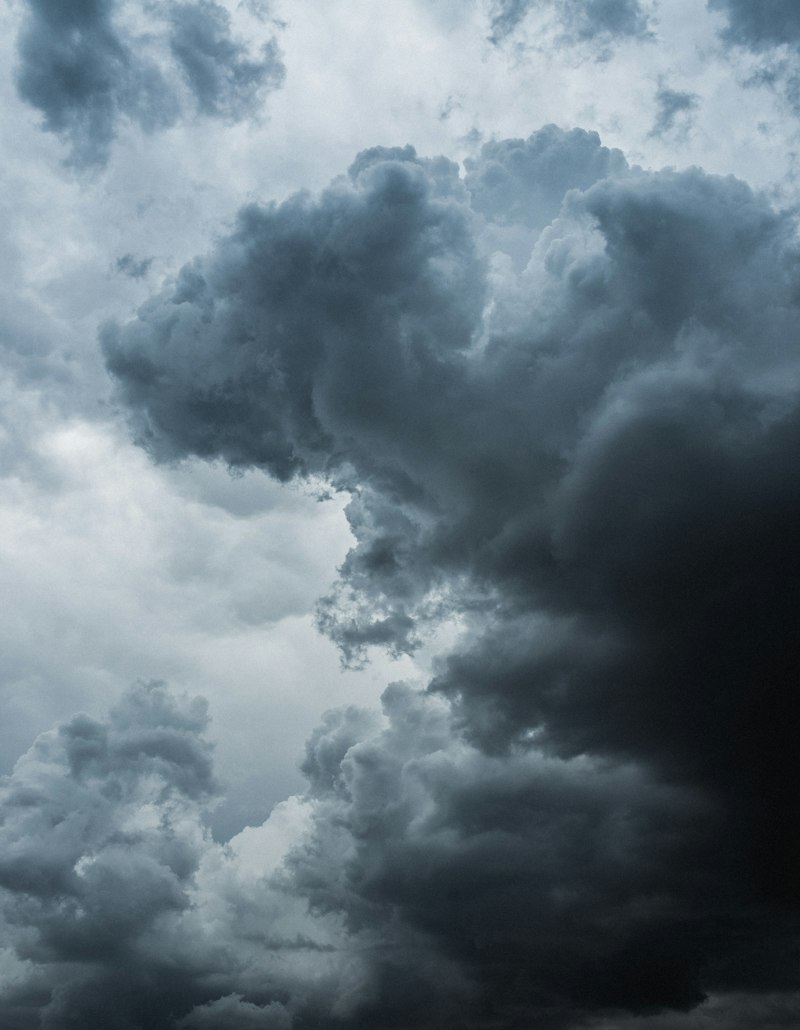
Clouds can be all different shapes and sizes. Some look like fluffy cotton balls floating in blue sky. Others are dark and gray because they're filled with so much water. The darker the cloud, the more water it's holding, and the more likely it is to rain.
Step Three: Precipitation
When clouds get too full of water droplets, the water falls back to Earth. This is called precipitation, and it can happen in several different forms depending on the temperature. Rain is the most common form of precipitation, but there's also snow, sleet, freezing rain, and hail.
Snow forms when the air is cold enough all the way from the clouds to the ground. Sleet happens when snow melts partway down and then refreezes. Freezing rain is similar to sleet but doesn't fully refreeze until it hits a cold surface. Hail forms inside thunderstorms when wind pushes raindrops up and down, adding layers of ice like an onion until the hailstone is heavy enough to fall.
Rain can be gentle and steady, or it can come down in heavy thunderstorms. Some places on Earth get very little rain (deserts), while others get rain almost every day (rainforests). The water cycle brings different amounts of precipitation to different places depending on the landscape, temperature, and wind patterns.
Step Four: Collection
After precipitation falls, the water collects in different places. Some water flows into rivers and lakes, where it might be used by animals, plants, and people. Some soaks into the ground, becoming groundwater that collects in underground layers of rock and sand called aquifers. Some water runs off into streams and rivers that flow to the ocean.
Collection is where the cycle starts all over again. Water in lakes and oceans evaporates back into the atmosphere. Water in rivers and streams flows to the ocean or lakes and then evaporates. Water underground slowly moves through the ground and can bubble up as springs or be pumped from wells. And the cycle continues!
Why Water Is So Important
Water is absolutely essential for all life on Earth. Humans, animals, and plants all need water to survive. Our bodies are made up of about 60% water. We need water to digest food, keep our blood moving, regulate our body temperature, and basically do everything our bodies do. You can survive for weeks without food, but only a few days without water!
Freshwater is especially precious because only about 3% of Earth's water is freshwater, and most of that is locked up in ice caps and glaciers. The freshwater in lakes, rivers, and underground aquifers that we can actually use is less than 1% of all Earth's water. That's why it's so important not to waste water!
People use freshwater for drinking, cooking, bathing, washing clothes and dishes, watering crops, and many other things. In some places, people have to walk miles just to get water for their families. Clean water is something many of us take for granted, but it's one of the most valuable resources on our planet.
How Clouds Form
Clouds are one of the most fascinating parts of the water cycle. They form when water vapor condenses around tiny particles in the air. These particles can be dust, pollen, smoke, or even salt from the ocean. Without these particles, called "condensation nuclei," water vapor would have a very hard time turning back into liquid water.
There are three main types of clouds. Stratus clouds are flat, layered clouds that often cover the whole sky like a blanket. Cumulus clouds are the fluffy, puffy clouds that look like cotton balls. They usually indicate fair weather when they're small but can grow into towering thunderstorms when they're big. Cirrus clouds are thin, wispy clouds found high in the sky. They're made of ice crystals instead of water droplets because it's so cold at high altitudes.
Scientists called meteorologists study clouds to predict weather. Dark, towering cumulonimbus clouds usually mean thunderstorms are coming. Thin, wispy cirrus clouds moving in from the west can indicate that a storm system is approaching within the next day or two. Watching clouds is not only beautiful—it's useful science!
Where Does Your Drinking Water Come From?
The water that comes out of your faucet at home has been on an incredible journey. Depending on where you live, your drinking water might come from a nearby lake, river, reservoir, or underground well. Water treatment plants clean the water to remove dirt, bacteria, and other impurities before sending it through underground pipes to your home.
Some places get their water from snowpack—snow that accumulates in mountains during winter and melts in spring and summer, filling reservoirs. Other places use desalination plants that remove salt from ocean water, but this process is expensive and uses a lot of energy.
After you use water in your home, it goes down the drain and travels to a wastewater treatment plant. There, it's cleaned and released back into rivers or the ocean, where it rejoins the water cycle and eventually comes back to us as precipitation. It's a beautiful system—when we don't pollute it!
Fun Facts About the Water Cycle
- A single thunderstorm cloud can hold billions of gallons of water!
- The average raindrop falls at about 14 miles per hour.
- It takes about 9 hours for a water droplet to travel from the ocean to the atmosphere and back as rain.
- The water in a glass of water might have been part of a dinosaur's puddle millions of years ago.
- Cloud seeding is a technique where scientists sometimes add tiny particles to clouds to help them produce more rain.
- Hurricanes can contain enormous amounts of water—one large hurricane can drop more than a trillion gallons of rain in a day!
- Antarctica contains about 60% of Earth's freshwater, stored in ice sheets.
A Simple Experiment: Watch Evaporation
You can see the water cycle in action right at home with this easy experiment. You'll need a clear glass or jar, a plastic bag, a rubber band, and some water.
Step 1: Fill a glass with water and mark the water level with a piece of tape or a marker.
Step 2: Cover the glass tightly with a plastic bag and secure it with a rubber band.
Step 3: Place the glass in a sunny window.
Step 4: Check on it every few hours and watch what happens. You should see condensation forming on the inside of the plastic wrap! This is water evaporating from the glass, hitting the cool plastic, and turning back into liquid water. Tiny droplets will form and eventually drip back down into the glass.
Congratulations—you've just created a mini water cycle in your kitchen!
The Water Cycle and Weather
The water cycle drives much of our weather. The sun's heat causes evaporation, which puts water vapor into the atmosphere. When this moisture condenses to form clouds, it releases heat energy that can fuel storms. This is why thunderstorms, hurricanes, and other weather events are connected to the water cycle.
Weather patterns are influenced by temperature differences, ocean currents, wind patterns, and geography. Mountains force moist air to rise and cool, causing rain on one side (the "windward" side) and creating dry "rain shadow" on the other side. Coastal areas have milder temperatures because the ocean stores and releases heat slowly. These patterns affect what kinds of plants and animals live in different places.
Understanding the water cycle helps scientists predict weather, manage water resources, and study climate change. When the climate gets warmer, the water cycle speeds up—more evaporation leads to more precipitation in some places but drought in others. That's why climate scientists pay close attention to changes in precipitation patterns.
Protecting Our Water
Since only a tiny fraction of Earth's water is available for us to use, it's crucial that we protect our water sources. Here are some ways you can help:
- Turn off the tap while brushing your teeth—you can save gallons of water each time.
- Take shorter showers. A 5-minute shower uses less water than a full bathtub.
- Fix leaky faucets. A dripping faucet can waste gallons of water in a single day.
- Don't throw anything in storm drains. They lead directly to rivers and streams.
- Pick up litter that could pollute waterways.
- Tell adults about the importance of protecting our water sources.
Explore More
The water cycle connects to so many other topics! Learn about how planets in our solar system work to understand why Earth is perfect for the water cycle. Try some fun science experiments at home to learn more about chemistry and physics. Or check our weather forecasting tool to see how meteorologists predict the weather using water cycle science!
The Never-Ending Journey
The water cycle is one of Earth's most beautiful and essential systems. It's been running for billions of years, and as long as the sun shines and water exists on Earth, it will keep going. Every raindrop, every cloud, every snowflake is part of this incredible journey.
Next time you see a cloud, feel rain on your face, or drink a glass of water, remember: you're connected to the entire planet through the water cycle. The water in your body has been everywhere—from the depths of the ocean to the highest clouds—and it's still on the move. That's pretty amazing when you think about it!